
How to Grow Thyme: Planting, Care, and Harvest Tips
Thyme is easily my favorite perennial herb. It grows most of the year in the low desert, it’s drought tolerant once established, and the flavor it adds to soups, roasted meats, and vegetables is hard to replace. But it’s one of the trickier herbs to grow well here. For years I could never seem to keep enough of it going. This post covers what finally worked — how to plant, care for, and harvest thyme in the low desert successfully, even through the heat.
If you’re just getting started with herbs or want to expand your collection, my Arizona Planting Guide is a great resource for timing, spacing, and tips tailored to the low desert.
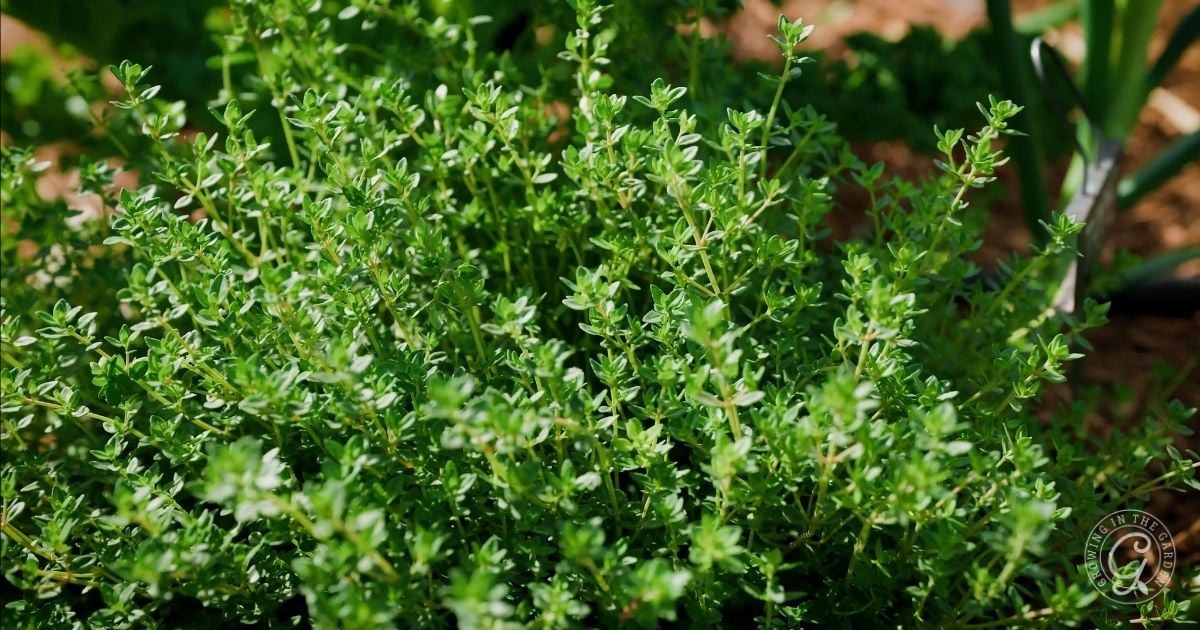
Key Takeaways: How to Grow Thyme
- Plant thyme in fall in the low desert for best results.
- It needs well-draining soil, at least 6 hours of sun, and afternoon shade once temperatures climb.
- It’s drought tolerant once established — overwatering and poor drainage are what kill it.
- Harvest frequently from the leafy tops, let a portion flower for pollinators, then prune back for a flush of new growth.
- It goes dormant in extreme heat and cold. That’s normal. Wait for new growth at the base before cutting back dead stems.

1. Plant Several (and Different) Thyme Plants
The best way to grow thyme successfully is to plant more than one. Having several thyme plants increases your chances of success and ensures you always have one to harvest from, even if another is flowering, going dormant, or recovering from a trim. I like to spread them throughout the garden in the corners of my raised beds.
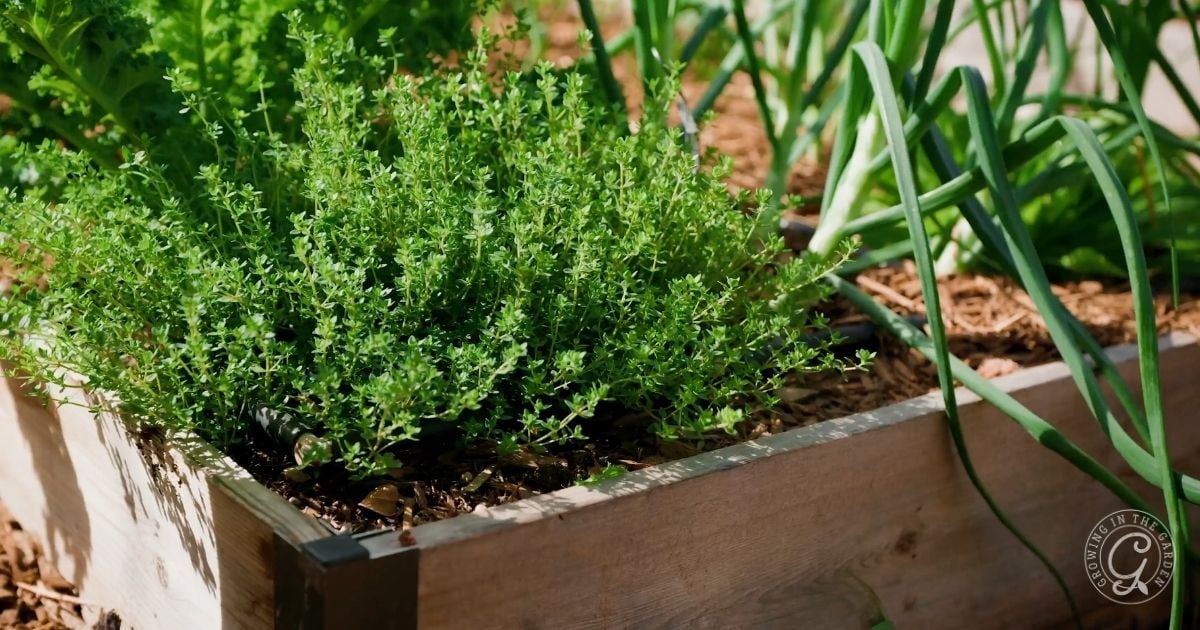
Beyond quantity, variety also makes a difference. There’s more than one kind of thyme, and each brings something unique to the garden. Planting a mix means you’ll enjoy a variety of aromas, leaf colors, and growth habits.
Here are some of my favorites:
- Common thyme – Classic culinary thyme; about 16 inches (40 cm) tall; white or purple flowers.
- English thyme – Softer, mounded form; slightly milder aroma; purple flowers.
- Lemon thyme – Strong citrus aroma; great for cooking; 12 inches (30 cm) tall.
- Creeping thyme – Bright green leaves; low and spreading (4–6 inches / 10–15 cm); perfect for containers or pathways.
- Golden thyme – Eye-catching gold leaves; about 6 inches (15 cm) tall.
- Provençal thyme – Smaller leaves with a strong aroma; compact 12-inch (30 cm) growth.
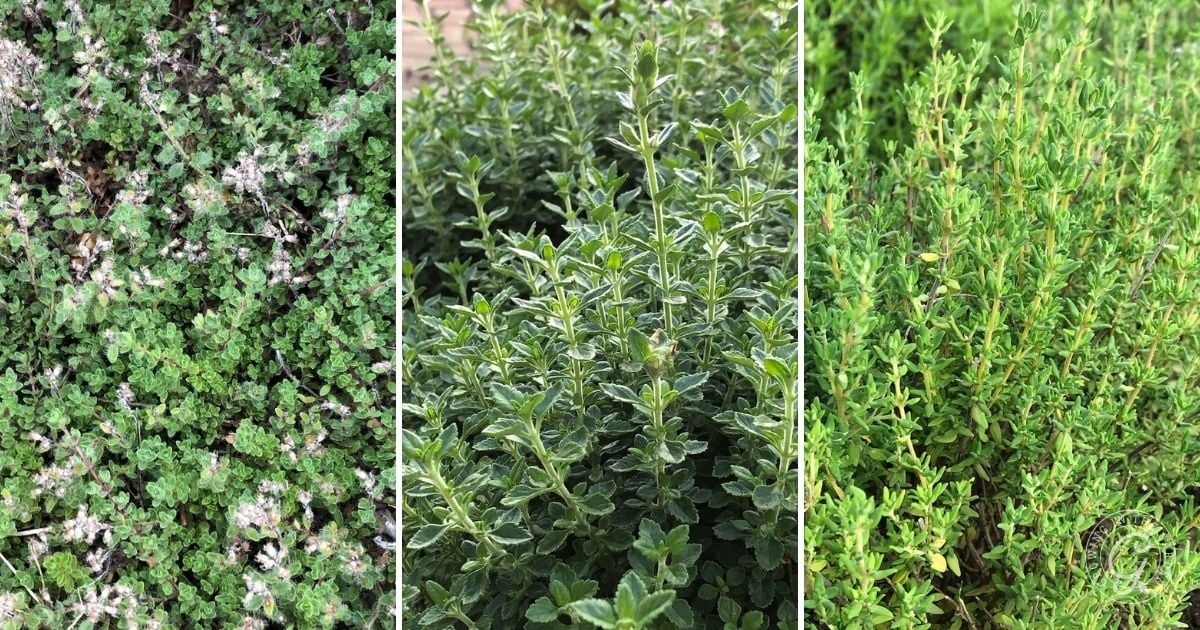
Having a few different varieties spread around the garden means you’ll always have something to harvest, even when one plant is flowering, dormant, or recovering from a trim.
Want to expand your herb garden even more? Here’s my guide to growing oregano and how to grow rosemary successfully. Want a quick visual reference? My Visual Guide for Low Desert Herbs makes it easy to see at a glance which herbs to grow and when.
2. Time It Right for a Head Start
Thyme can be grown from seed, but I’ve had the best luck with strong transplants. Starting with an established plant gives you a head start and earlier harvests.
When shopping for thyme transplants, choose:
- Short, bushy plants with growth spilling over the pot.
- Avoid tall, leggy plants or anything with dry patches or brown spots.
If you do want to grow from seed:
- Start indoors 8–10 weeks before your outdoor planting date.
- Press seeds lightly into moist seed-starting mix and barely cover.
- Keep the soil around 70°F (21°C) for best germination.
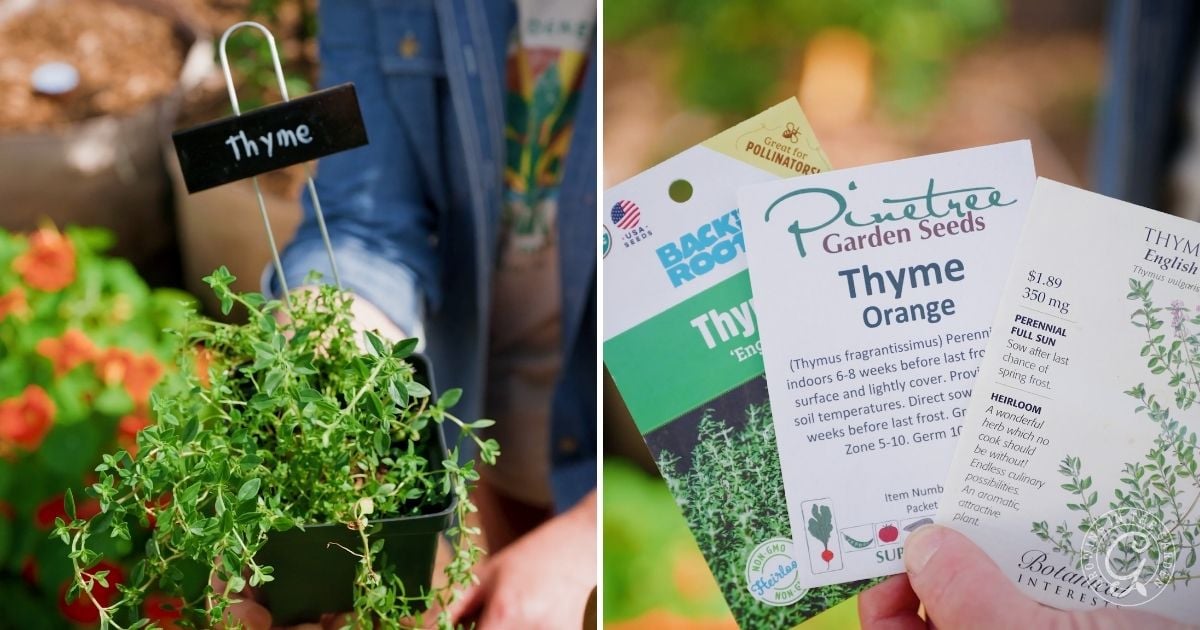
Plant thyme outdoors once the risk of frost has passed and the soil has warmed. Space plants 6–12 inches (15–30 cm) apart.
In the low desert of Arizona, the best time to plant thyme is from October to April, before or after the peak heat. The earlier in the planting window, the better. This gives the plant longer to become established before the heat.
3. Give Your Thyme What It Needs
Sunlight:
Thyme prefers at least 6 hours of full sun, but in hot climates, it benefits from afternoon shade during the hottest months.
Soil:
Well-drained soil is essential. If your soil is heavy or slow to drain, consider planting thyme in raised beds or containers filled with a high-quality potting mix.
Curious which herbs thrive in similar conditions? Best Perennial Herbs for Hot Climates highlights tried-and-true varieties that love the heat, just like thyme does.
Watering:
Once established, thyme is drought-tolerant. Let the top few inches of soil dry out before watering again.
Too much moisture = root rot. If stems start to yellow or plants wilt despite moist soil, drainage is likely the issue.
Fertilizing:
Thyme doesn’t need much. A spring application of compost is usually enough. Avoid heavy fertilization; it reduces the flavorful oils in the leaves.
Mulching:
Use a light mulch like straw or wood chips to regulate soil temperature and suppress weeds. Keep it thin. Thyme does not do well with a thick layer of mulch around the base because it traps too much moisture near the roots, which is exactly the condition that leads to rot. A thin layer is fine. Piled-up mulch is not.
Pruning:
Regular snipping encourages fresh growth and keeps plants bushy. Let a portion of the plant flower because the blooms attract pollinators and beneficial insects. Once flowering wraps up, prune those stems back to encourage a flush of new growth.
During extreme heat in summer and cold in winter, hold off on pruning. Let the plant go dormant. Don’t prune, fertilize, or overwater during that period. Once the weather shifts and you see new growth appearing at the base of the plant, that’s your signal. Cut back any dead stems to that point and you’ll get a strong flush of new growth.
Thyme often looks tired after summer, but it rebounds well—here’s how to revive and maintain thyme in the fall.
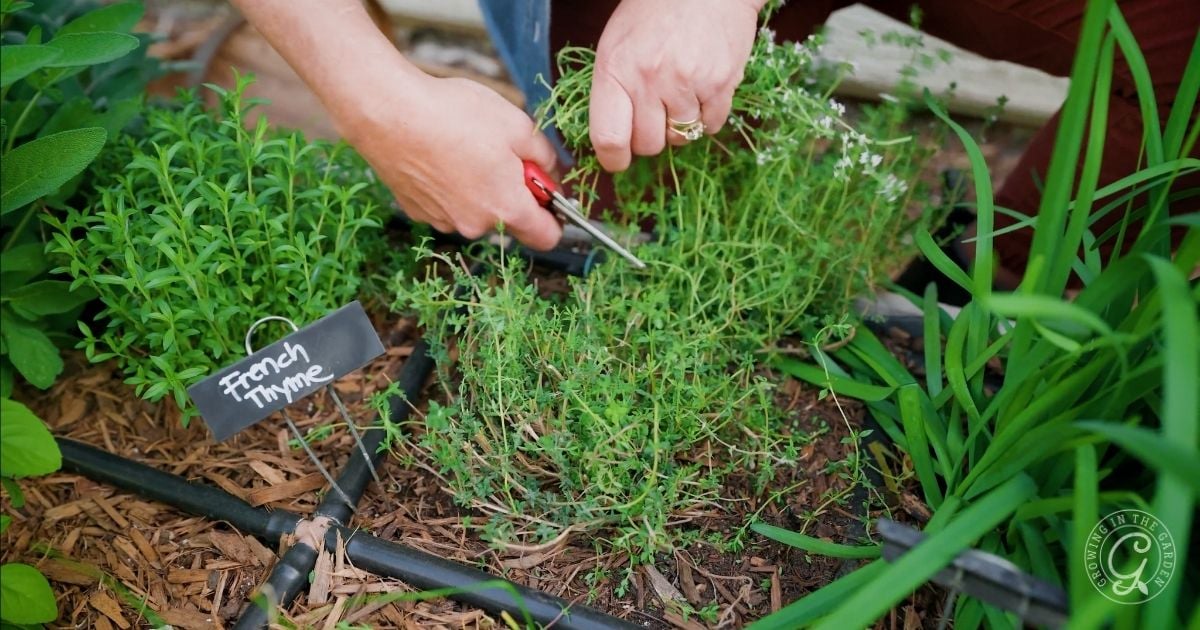
Propagation Tip:
A simple way to multiply your thyme plants is to bury a low-growing stem in a bit of soil. It will form roots along the buried portion. Once rooted, snip it from the parent plant and replant it elsewhere.
Thyme loses some of its flavor intensity after a few years. If your older plants seem less productive or flavorful, take cuttings from the healthiest stems and start fresh. It’s easier than it sounds and you’ll end up with more plants.
4. Harvest Often for the Best Thyme
Once your thyme is established (usually 6 to 8 weeks after transplanting), you can start harvesting. Snip off the top leafy portions of stems and leave the woody parts behind.
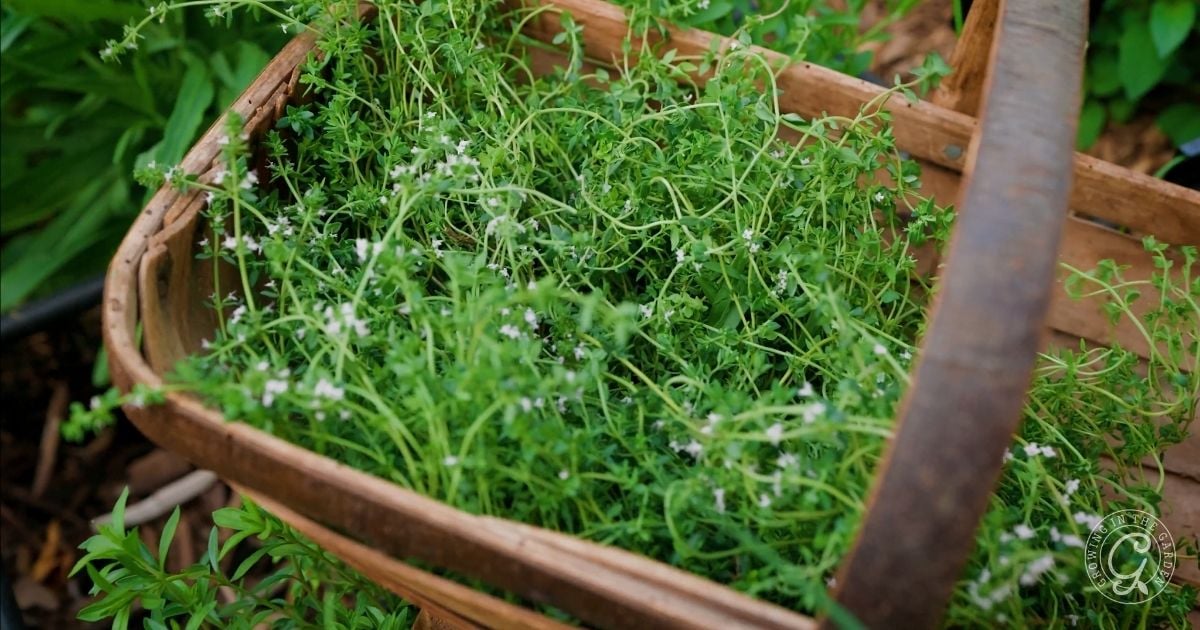
For the most concentrated flavor, harvest just before the flowers open. The flowers are edible but milder than the leaves.
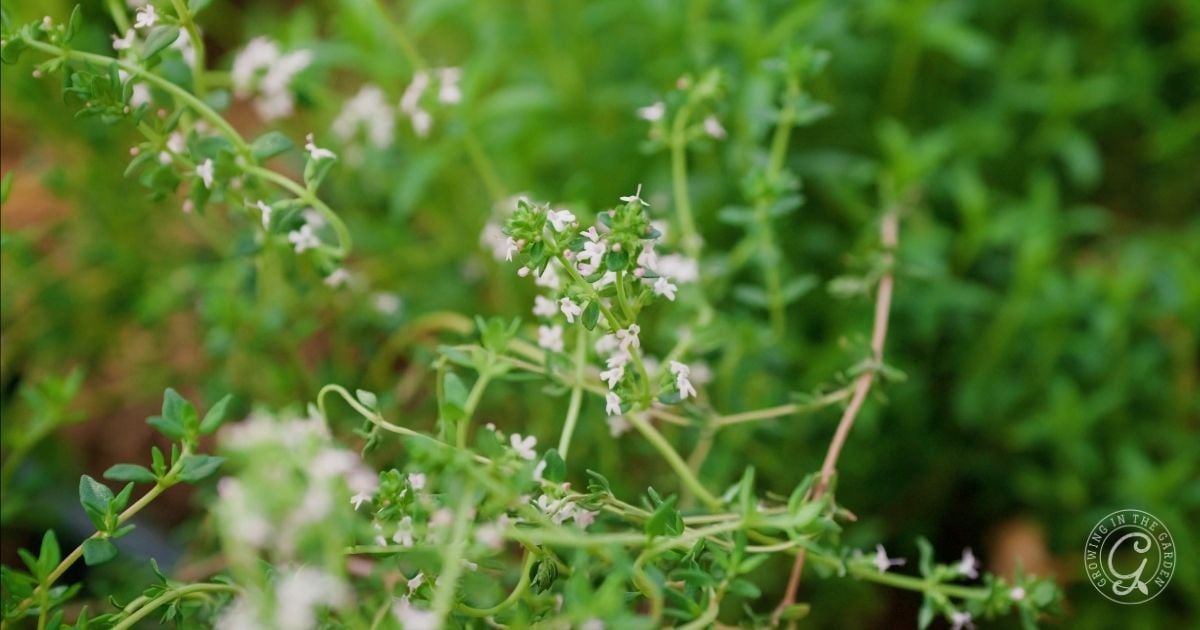
Frequent harvesting encourages new growth and keeps the plant compact.
5. Use Fresh or Preserve for Later
Fresh thyme adds incredible flavor to:
- Roasted potatoes and meats
- Vegetable dishes
- Soups, sauces, and more
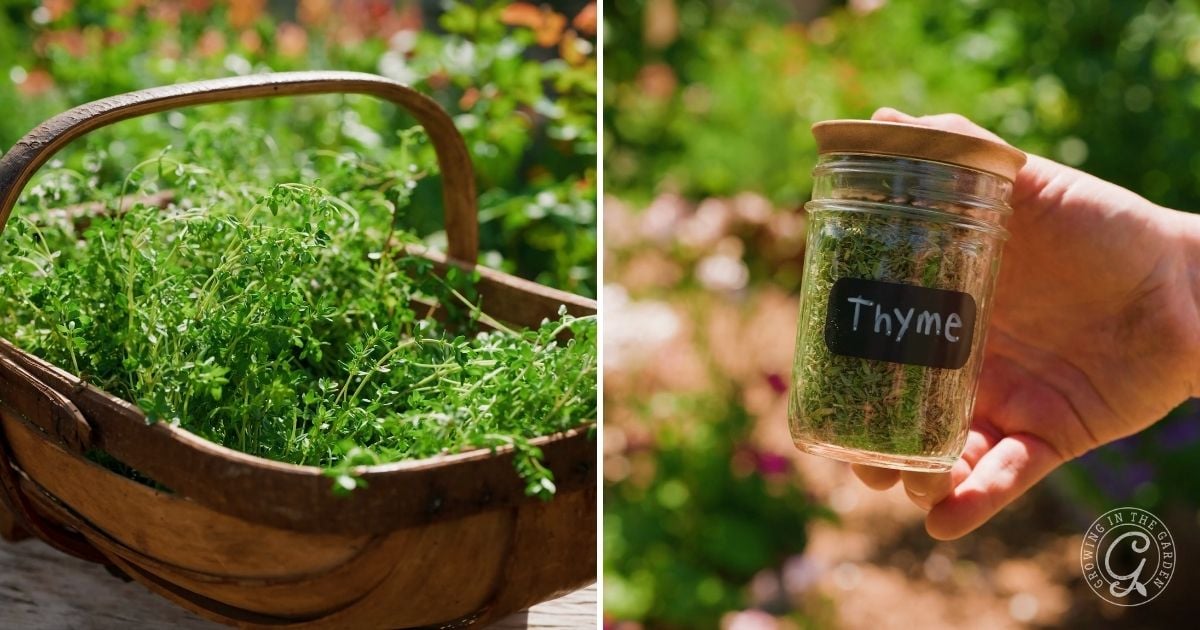
Thyme grows nearly year-round in the low desert, so I often harvest just what I need. But it’s also easy to preserve:
- Refrigerate: Wrap fresh sprigs in a damp paper towel and store in a container. Lasts up to 2 weeks.
- Freeze: Strip leaves and freeze flat in a single layer, or use ice cube trays with a bit of water or oil.
- Dry: Air-dry or use a dehydrator. Rub the leaves over a screen to separate them from the stem (picture below). Store in a sealed jar in a cool place.
If you enjoy growing drought-tolerant herbs like thyme, learn how to grow hyssop to add another fragrant, pollinator-friendly option to try in your herb garden.
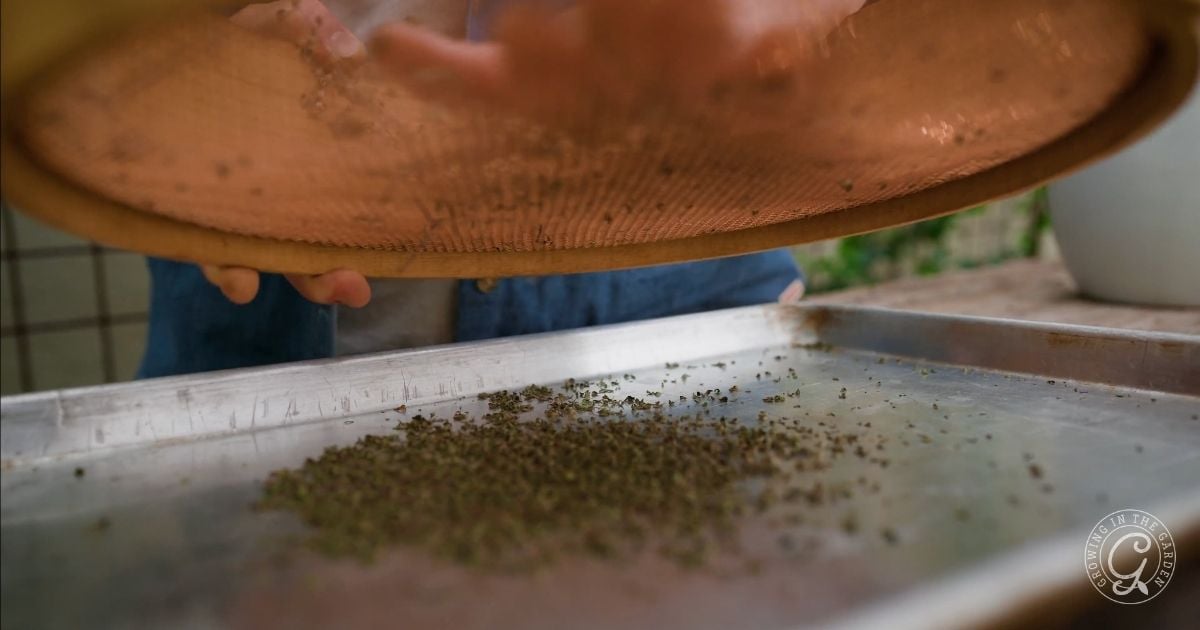
To strip thyme leaves from the stem quickly, hold the tip of a stem and run it across a wire basket or rack in the opposite direction of growth. The leaves come off cleanly without having to pick each one individually.
Want to preserve herbs for maximum flavor? Check out this post on how to freeze-dry herbs.
If you’re looking for a recipe that makes good use of fresh thyme, my Blue Cheese Thyme Scalloped Potatoes is worth making. It’s one of my favorites.
How to Grow Thyme in Arizona
Growing thyme in the low desert takes more attention than most herb guides suggest. The heat, drainage requirements, and seasonal dormancy all work differently here. These are the things that make the biggest difference:
- Plant thyme from October to April to give it time to settle in before summer. Remember, the earlier in the planting window, the better. This gives the plant longer to become established before the heat.
- Provide afternoon shade once temperatures heat up.
- Use raised beds or containers if your soil doesn’t drain well.
- See the full guide to growing thyme and other herbs in containers and learn when and how to repot herbs for lasting success.
- In early spring and late fall, give thyme a light trim to stimulate new growth.
- Harvest frequently to prevent blooming and encourage leaf growth.
- Allow thyme to rest during the hottest months. Wait until temps cool and new growth appears before pruning again.
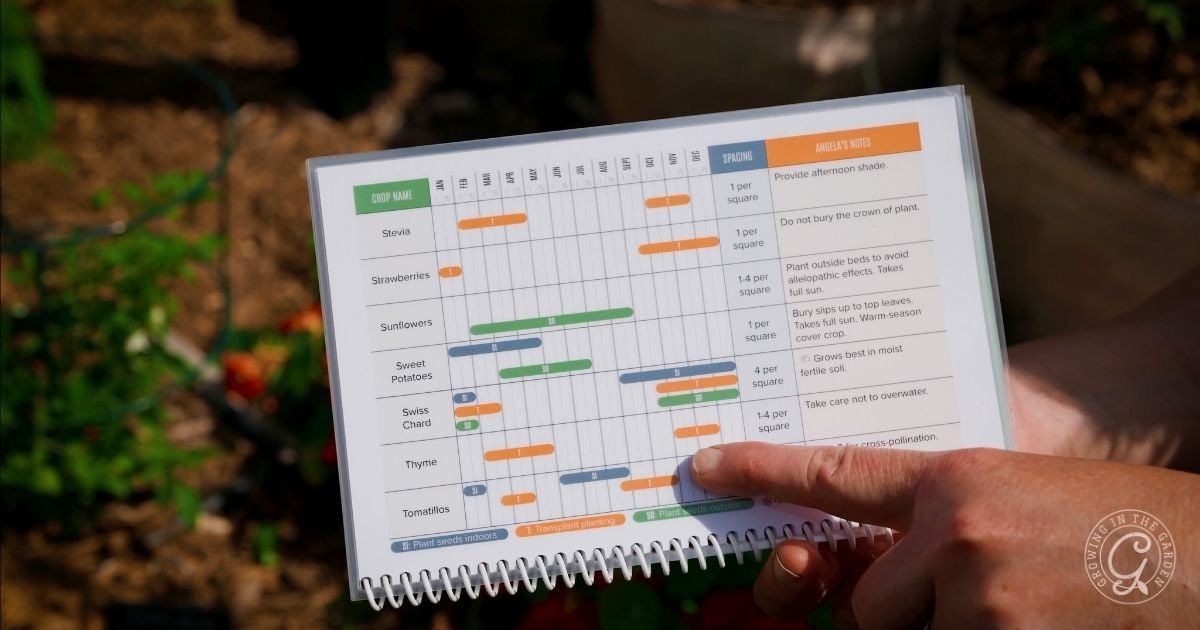
For even more advice on keeping herbs happy through Arizona’s extreme temperatures, check out How to Grow Herbs in Hot Climates—it’s packed with practical strategies for success.
Growing Thyme Frequently Asked Questions
Yes, thyme is a perennial in the low desert, meaning it can grow for multiple years. It goes dormant during extreme summer heat and may look rough after cold winters, but it typically comes back when the weather shifts. That said, thyme loses some flavor intensity after a few years. Taking cuttings from healthy plants and starting fresh every few years keeps the herb productive and flavorful.
The most common reasons are overwatering and poor drainage. Thyme is drought-tolerant once established and does not do well with consistently moist soil. Root rot is the usual culprit. Make sure the soil drains well, let it dry out between waterings, and avoid piling mulch around the base of the plant. If stems are yellowing or the plant wilts despite moist soil, the problem is drainage.
Usually yes, but it may look rough. Thyme goes semi-dormant in intense heat and often looks tired or partly dead by late summer. Don’t cut it back aggressively during that period. Wait until you see new growth appearing at the base of the plant, then trim the dead stems back to that point. You’ll get a flush of new growth once temperatures drop.
Fall is the best time to plant thyme in the low desert, from October through early spring. This gives the plant time to establish a strong root system before summer heat arrives. The earlier in that window, the better. There’s also a shorter spring planting window, but fall-planted thyme generally performs better.
At least 6 hours of direct sun daily. In hot climates, afternoon shade during the hottest months helps thyme survive and stay productive through summer. Morning sun with afternoon shade is the ideal setup in Arizona from late spring through early fall.
Harvest frequently. Regular snipping of the top leafy growth keeps plants bushy and compact. Letting plants flower without pruning afterward is the main reason thyme gets leggy. Allow some stems to flower for pollinators, then prune those stems back once flowering is done to encourage new leafy growth.


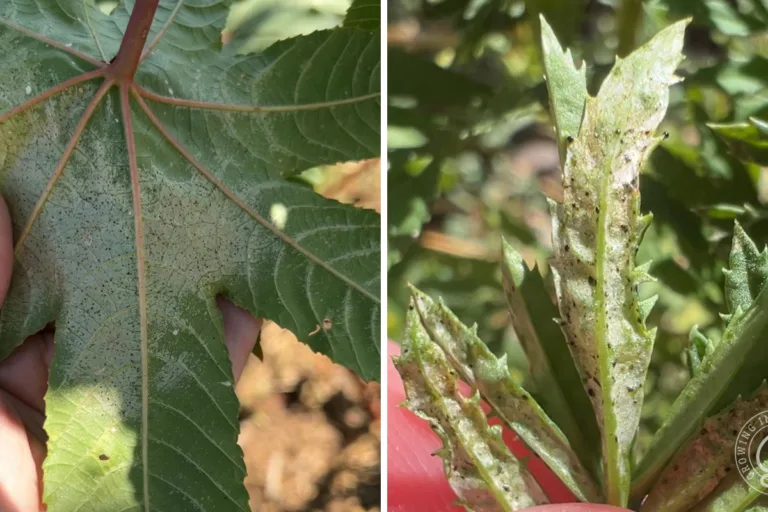
Hi, I have a thyme that looks good & healthy, I bought it in the garden shop of my neighbourhood who are good profesionals. I recently planted (last week) and just noticed that their under leaves are purple. Looking other thyme plants in the internet can`t find this attribute in thymes. Have you ever seen this? Do you know what might be happening? Are this edible? I bought them cause Im a chef and wanted to use them on m plates 🙂
Best!
Santiago from Argentina!
Hi Santiago. Plants grown in soil deficient in potassium may have purple leaves. A lack of potassium is also a cause of poor root growth and poor overall plant growth. Organic sources of phosphorus include rock phosphate, bone meal, and guano.
It may need a little organic fertilizer to get it back on track. Water well before and after application and use a light hand. The affected thyme is still edible. Best of luck to you.